Ethanol is much more than the alcohol found in beer, wine, and spirits. It is a versatile chemical used in various applications from pharmaceutical manufacturing and personal care products to industrial solvents and renewable fuels.
But what is ethanol, how is it produced, and why do so many industries depend on it? Its chemical properties, availability from different raw materials, and suitability for numerous formulations make it an important resource for manufacturers worldwide.
In this guide, we explore the main uses of ethanol, explain its production methods, and discuss what businesses should consider when sourcing ethanol in bulk.
Specs & certifications of Nedstar’s ethanol
Nedstar supplies high-purity 96% ethanol that complies with EU Regulation (EU) 2022/1303 for food-grade ethanol. Our extra neutral alcohol meets BRCGS, ISO 9001, REACH, and ECHA Article 95 requirements, with kosher and GMO-free certification options available.
|
Chemical formula |
C₂H₅OH |
|
CAS registry number |
64-17-5 |
|
Odour |
Neutral |
|
Colour |
Colourless |
|
Alcohol by vol. At 20°C |
>96% |
|
Methanol < 2 g/hL |
Approximately 13°C for pure ethanol |
|
pH level |
5.5 - 7.4 |
|
GHS labelling |
|
|
Boiling point |
Approximately 78.4°C at standard atmospheric pressure |
|
Density |
Approximately 0.7893 g/cm³ at 20°C |
|
Flash point |
Approximately 13°C (55°F), closed cup |
|
Refractive index |
Approximately 1.361 to 1.362 at 20°C |

What is ethanol used for?
So, what is ethanol used in, and why is it so valuable across different industries?
The uses of ethanol extend across food processing, pharmaceuticals, cosmetics, chemical manufacturing, and the fuel industry. Depending on the application, businesses may require different ethanol concentrations, purity grades, or denaturing specifications.
Food processing and drinking alcohol
One of the best-known uses of ethanol is the production of alcoholic beverages. It is the type of alcohol responsible for the intoxicating effects of beer, wine, and spirits.
Food-grade ethanol also plays an important role beyond drinking alcohol. Manufacturers use it to:
- Extract natural flavours and aromas from vanilla, herbs, spices, and other ingredients.
- Dissolve and carry flavouring compounds in food and beverage formulations.
- Produce spirits, liqueurs, and other alcoholic beverages.
- Support approved food processing and extraction applications.
Ethanol intended for human consumption must meet the relevant food safety, purity, and regulatory requirements. Industrial or denatured alcohol are not the substitutes for food-grade ethanol.
Pharmaceuticals and disinfectants
Ethanol is widely used in pharmaceutical manufacturing because of its solvent properties and antimicrobial activity.
Common applications include:
- Dissolving active pharmaceutical ingredients and excipients in suitable formulations.
- Producing tinctures, extracts, and other liquid preparations.
- Serving as an antimicrobial ingredient in properly formulated disinfectants and hand sanitisers.
- Supporting pharmaceutical extraction, cleaning, and manufacturing processes.
Ethanol can inactivate many bacteria and enveloped viruses when used at an appropriate concentration and under suitable conditions. However, its effectiveness depends on formulation, contact time, and the target microorganism.
Pharmaceutical manufacturers must select ethanol grades that meet the applicable quality and regulatory specifications.
Cosmetics and personal care products
Ethanol is a common ingredient in perfumes, fragrances, deodorants, hair products, and other personal care products.
Its main functions include:
- Acting as a solvent for fragrances and other formulation ingredients.
- Helping distribute ingredients evenly throughout a product.
- Evaporating relatively quickly after application.
- Supporting extraction of botanical ingredients used in cosmetic formulations.
Depending on the intended application and local regulations, manufacturers may use suitable high-purity ethanol or denatured alcohol.

Industrial solvents and chemical manufacturing
The industrial uses of ethanol are extensive because it can dissolve many substances and participate in chemical reactions. As one of the widely used organic solvents, ethanol is found in paints, coatings, printing inks, cleaning formulations, and chemical processing.
Ethanol is miscible with water and many organic solvents, making it useful for dissolving and extracting other organic compounds. Beyond its role as a solvent, ethanol serves as a raw material for producing other chemicals.
For example, ethanol reacts with acetic acid to form ethyl acetate, an important solvent used in coatings, adhesives, and printing inks. This esterification reaction uses an acid catalyst, such as sulphuric acid. Ethanol can also react with other carboxylic acids to produce ethyl esters used in various industrial applications.
Ethanol also supports the manufacture of dyes, explosives, and other speciality chemicals, primarily as a solvent, processing agent, or chemical intermediate. Its suitability depends on the specific manufacturing process and required purity grade.
Ethanol fuel and energy source applications
Ethanol fuel is used as an energy source and fuel additive, particularly in the transport sector.
Fuel ethanol is commonly blended with petrol (gasoline). For example, E10 contains approximately 10% ethanol and 90% petrol by volume, while E85 has a much higher ethanol content and is intended for compatible vehicles. Compared with pure gasoline, ethanol-blended fuels can offer a higher octane rating, although their energy content per litre varies with the blend.
Ethanol has a long history as an alternative fuel. It was widely used for lighting in the 19th century, although excise taxes introduced during the American Civil War made it less competitive. In 1908, Henry Ford introduced the Model T, which could operate on ethanol, petrol, or a combination of both. Ethanol production later increased during World War II, while renewed interest in alternative fuels during the 1970s helped support its development as a modern transport fuel.
Ethanol has a high octane rating, making it useful in petrol blending. However, it contains less energy per litre than petrol, so fuel consumption can vary depending on the blend and vehicle.
Bioethanol produced from renewable feedstocks can also help reduce dependence on petroleum imports and support agricultural and industrial economic activity.
Its environmental benefits are not automatic. Lifecycle greenhouse gas emissions depend on factors such as feedstock cultivation, land use, processing energy, transport, and production efficiency.

How is ethanol produced?
Ethanol production primarily follows two methods: biological fermentation and synthetic chemical production.
The selected process depends on raw material availability, production costs, intended applications, and required product specifications.
Ethanol production through fermentation
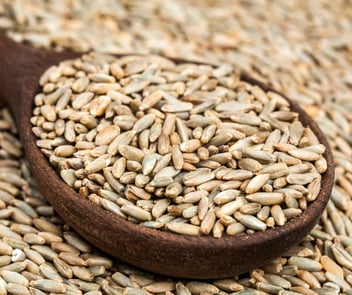
Fermentation is one of the most widely used methods of producing ethanol, particularly for food-grade alcohol and biofuel applications. During fermentation, yeast converts sugars into ethanol and carbon dioxide. Common sugar-based feedstocks include sugarcane, sugar beet, and molasses. Starch-rich materials, such as corn grain and wheat, can also be used after the starch is converted into fermentable sugars.
The main production stages include:
- Feedstock preparation: Raw materials are cleaned, milled, or otherwise processed.
- Sugar conversion: Starch-containing materials undergo enzymatic hydrolysis to release fermentable sugars.
- Fermentation: Yeast converts the sugars into ethanol and carbon dioxide.
- Distillation: Ethanol is separated and concentrated from the fermentation mixture.
- Further purification: Additional processing is used where higher ethanol concentrations or specific purity requirements apply.
Some production facilities also recover valuable co-products. For example, certain corn ethanol processes generate distillers grains that can be used in animal feed.
Cellulosic ethanol from agricultural residues
Cellulosic ethanol is produced from lignocellulosic biomass, including crop residues, agricultural by-products, and other cellulose-containing materials.
Unlike conventional starch-based ethanol production, this process requires additional pretreatment and hydrolysis to release fermentable sugars from cellulose and hemicellulose.
Cellulosic ethanol is considered an advanced biofuel pathway because it can use non-food biomass and agricultural residues. However, feedstock complexity, processing costs, and conversion efficiency remain important commercial challenges.
Synthetic ethanol production
Ethanol can also be produced on an industrial scale through the hydration of ethylene. During this process, ethylene reacts with water in the presence of an acid catalyst, commonly based on phosphoric acid, to form ethanol.
Synthetic ethanol is chemically identical to ethanol produced through fermentation. However, its feedstock origin and production route can affect its sustainability profile and suitability for applications with specific sourcing requirements.
Understanding different ethanol grades
Not every ethanol product is suitable for every application. For businesses sourcing ethanol in bulk, selecting the appropriate grade is just as important as choosing the required concentration.
|
Ethanol type |
Main characteristics |
Typical applications |
|
Highly purified ethanol, commonly around 96% alcohol by volume |
Spirits, flavourings, and suitable food applications |
|
|
Very low water content, typically at least 99.5% ethanol depending on specification |
Chemical manufacturing, solvents, and fuel blending |
|
|
Another name commonly used for essentially water-free ethanol |
Laboratory, pharmaceutical, and industrial applications |
|
|
Ethanol containing deliberately added denaturants |
Industrial solvents, cleaning products, and technical applications |
|
|
Ethanol produced and specified for fuel applications |
Petrol blending and other approved fuel uses |
Absolute alcohol vs. anhydrous ethanol
Absolute ethanol, also known as absolute alcohol or anhydrous ethanol, refers to ethanol with very low water content. It is commonly used in laboratory, pharmaceutical, and industrial applications where moisture must be carefully controlled.
Conventional distillation of ethanol-water mixtures encounters an azeotrope, making additional dehydration necessary to obtain very high ethanol concentrations.
Industrial producers may use molecular sieves or other suitable dehydration technologies to remove residual water.
Denatured alcohol
When ethanol is intentionally mixed with substances that make it unsuitable for drinking, the resulting product is called denatured alcohol.
Denaturing is used for various industrial and technical applications and may affect excise duty treatment, depending on the jurisdiction and applicable regulations.
The choice of denaturant matters because it can influence product compatibility, safety, and regulatory compliance.
Is ethanol safe to use?
Ethanol can be handled safely when the appropriate controls are in place, but its risks depend on concentration, purity, exposure, and application. Ethanol belongs to Hazard Class 3 for transport because it is a flammable liquid. Its vapours can form flammable mixtures with air, making ignition control essential during storage and handling.
Although ethanol has relatively low acute toxicity compared with methanol, it can still cause serious health effects when consumed excessively or handled improperly. At higher concentrations, ethanol may cause skin and eye irritation, while significant vapour exposure can lead to adverse health effects.
For safe handling, businesses should:
- Keep ethanol away from open flames, sparks, and other ignition sources.
- Provide suitable ventilation and vapour controls.
- Use appropriate personal protective equipment, including gloves and eye protection.
- Select compatible storage containers and transfer equipment.
- Follow the product's Safety Data Sheet (SDS) and applicable transport regulations.
Beyond industrial handling risks, excessive ethanol consumption also presents serious health concerns. According to the World Health Organization (WHO), approximately 2.6 million deaths worldwide were attributable to alcohol consumption in 2019. This highlights the importance of distinguishing beverage-grade ethanol from industrial products, which must never be consumed unless specifically approved for that purpose.
What should businesses consider when sourcing ethanol in bulk?
Choosing a bulk ethanol supplier involves more than comparing prices. Businesses should consider the product's intended use, purity requirements, feedstock origin, and supply chain reliability.
Important procurement considerations include:
- Purity and concentration: Confirm the required ethanol percentage and allowable impurity limits.
- Physical properties: Verify physical parameters such as density and specific gravity, which can help assess product specifications and support quality control.
- Feedstock origin: Determine whether agricultural, synthetic, or certified renewable sourcing is required.
- Regulatory compliance: Check applicable food, pharmaceutical, chemical, and transport requirements.
- Documentation: Request relevant specifications, Certificates of Analysis (CoA), and Safety Data Sheets.
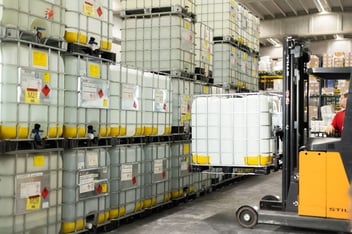
- Packaging and logistics: Choose suitable bulk delivery formats, storage arrangements, and transport conditions.
- Supply reliability: Evaluate the supplier's production network, quality controls, and ability to meet recurring demand.
For companies purchasing ethanol on an industrial scale, clear product specifications and dependable logistics help reduce procurement risks and maintain consistent manufacturing operations.

Frequently Asked Questions