



Cyclopentane
High-quality cyclopentane for your business
Looking for a reliable cyclopentane supplier for industrial manufacturing? Nedstar provides sourcing solutions for high-quality cyclopentane used in polyurethane (PU) foam, polyisocyanurate (PIR) insulation, refrigeration equipment, chemical processing, and other industrial applications.
Cyclopentane is a low global warming potential (GWP) blowing agent that supports the manufacture of high-performance insulation materials. With zero ozone depletion potential, it provides an alternative to certain fluorinated blowing agents in applications where the required safety and processing controls are in place.
Whether you need cyclopentane in bulk for insulation panels, refrigerator production or chemical synthesis, Nedstar helps you identify suitable grades, technical specifications, and delivery arrangements. Bio-based cyclopentane options can also be explored for manufacturers seeking renewable raw materials.
Why choose Nedstar as your partner for cyclopentane?
Reliable global sourcing
Nedstar connects manufacturers with an established global supplier network, supporting cyclopentane sourcing according to purity, availability, origin, and industrial requirements.
Consistent product quality
We help customers identify cyclopentane grades that meet their technical requirements, using relevant quality documentation, batch-specific specifications, and customer feedback to support consistent manufacturing performance.
Technical and regulatory support
Our product specialists help you navigate product selection, safety data sheets, applicable REACH requirements, and documentation needed for industrial applications.
Flexible bulk supply
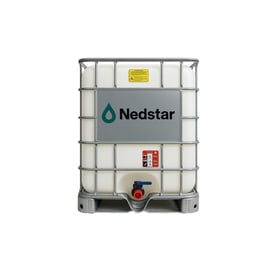
From suitable IBCs to ISO tanks and tank trucks, Nedstar coordinates packaging and international logistics according to your required volumes and destination.
What is cyclopentane?
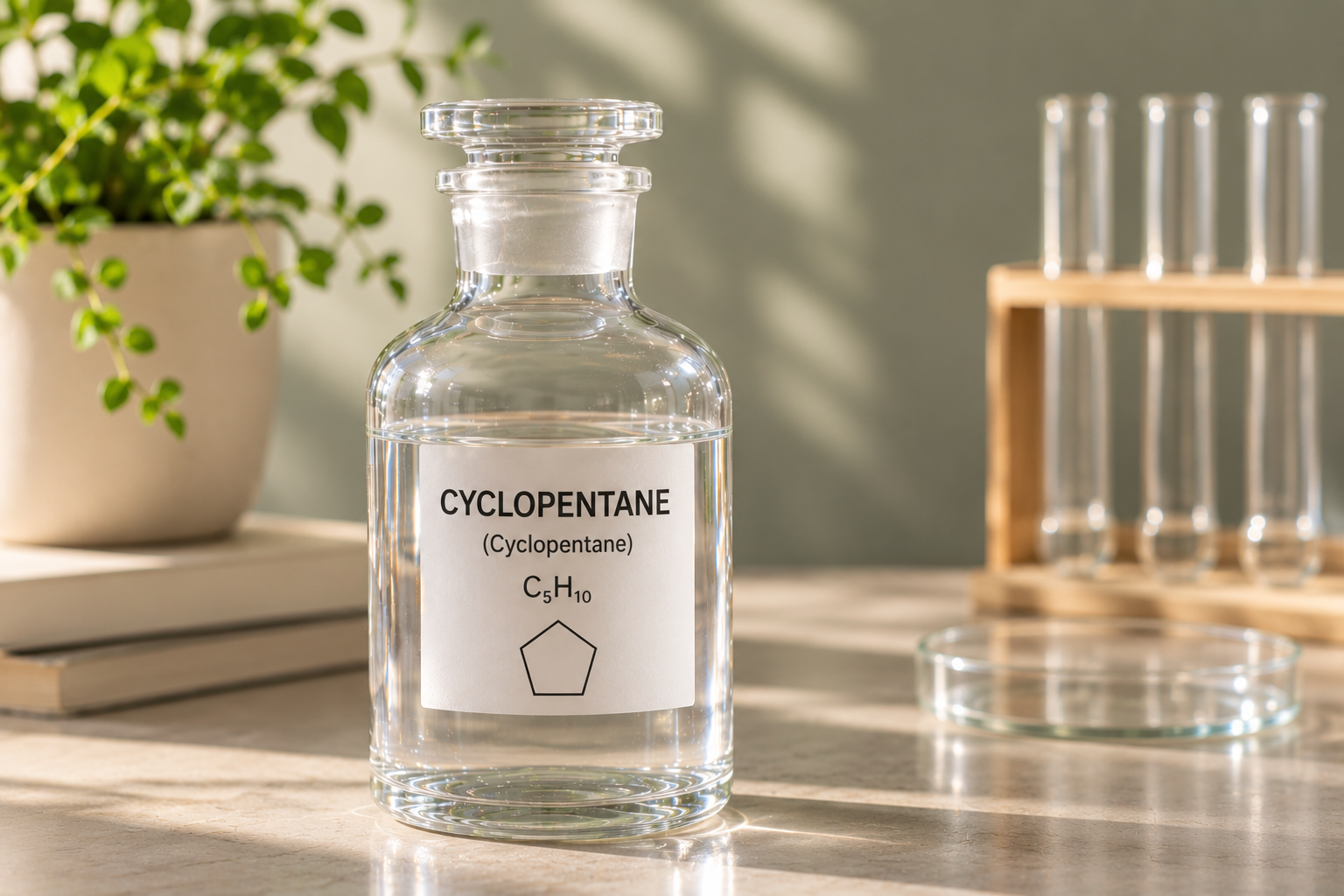
Cyclopentane is a highly flammable, colourless alicyclic hydrocarbon with the molecular formula C₅H₁₀ and a molecular weight of approximately 70.13 g/mol. It is a saturated cyclic compound consisting of five carbon atoms arranged in a ring, each bonded to hydrogen atoms.
Unlike straight-chain pentane, cyclopentane has a closed-ring molecular structure. Its carbon-carbon-carbon bond angles are generally smaller than the ideal tetrahedral angle of 109.47°, contributing to a degree of ring strain. However, cyclopentane is more stable than smaller cycloalkanes such as cyclopropane.
The molecule adopts non-planar envelope and half-chair conformations rather than remaining in a single plane. These structures undergo rapid interconversion through pseudorotation, helping reduce torsional strain within the five-membered ring.
Cyclopentane is a volatile liquid with a boiling point of approximately 49°C, a melting point near −94°C and a density of approximately 0.75 g/cm³ at ambient temperature. It is practically insoluble in water but soluble in various organic solvents, including alcohols and benzene, which may be present in industrial formulations.
Its volatility, low thermal conductivity in the gas phase and chemical characteristics make it particularly valuable as a blowing agent in rigid insulation foams.
How is cyclopentane made?
Cyclopentane is traditionally obtained from petroleum-derived hydrocarbon streams through separation and refining processes. Depending on the production route, it can also be manufactured through catalytic conversion of suitable hydrocarbon feedstocks.
Petroleum-based production
Conventional cyclopentane is recovered from petroleum processing streams containing C5 hydrocarbons and prepared for industrial use through fractionation, purification, and other refining operations.
Catalytic conversion
Certain catalytic processes can convert suitable C5 hydrocarbons, including branched pentane isomers, into cyclic compounds through isomerisation and dehydrocyclisation reactions. The resulting product mixture requires further separation, purification, and preparation to meet industrial specifications.
Bio-based cyclopentane production
Renewable cyclopentane can be produced from biomass-derived hydrocarbons or other renewable carbon sources through chemical synthesis and purification. It has the same molecular structure as conventional cyclopentane, while its renewable origin requires appropriate traceability and certification. Availability depends on the production route and supplier.
Cyclopentane product specification sheet
Specs & certifications
287-92-3
206-016-6
C₅H₁₀
Clear, colourless liquid
Petroleum-derived C5 fraction / catalytic conversion / bio-based
IBC (1,000 L) · ISO container (26,000 L)
COA, TDS, ISCC+ sustainability declaration, GHG add-on 205-01
![]()
Applications
What is cyclopentane used for?
Cyclopentane is widely used as an industrial blowing agent and solvent. Examples of its main applications include polyurethane insulation, refrigeration systems, building materials, and selected chemical manufacturing processes.
Cyclopentane for refrigerators and freezers
Cyclopentane is a widely used blowing agent for polyurethane insulation in refrigerators and freezers. It helps create rigid foam insulation around refrigeration compartments, limiting heat transfer and supporting energy-efficient appliance designs.
Unlike refrigerants that circulate within the cooling system, cyclopentane is generally incorporated into the insulation foam during manufacturing.
Cyclopentane for polyurethane foam
Cyclopentane is used as a physical blowing agent in the manufacture of rigid polyurethane (PU) foam. During processing, it vaporises as the reacting mixture heats up, creating gas-filled cells within the expanding polymer structure.
The resulting cellular structure provides thermal insulation properties suitable for industrial and commercial applications. Manufacturers must optimise cyclopentane concentration, formulation compatibility, and processing conditions to achieve the required foam density and performance.
Cyclopentane as an HFC replacement blowing agent
Cyclopentane offers an alternative to certain hydrofluorocarbon (HFC) and ozone-depleting blowing agents used in insulation manufacturing.
It has zero ozone depletion potential and a comparatively low direct GWP. However, cyclopentane is highly flammable, requiring suitable equipment design, ventilation, leak prevention, and ignition-source controls.
Cyclopentane for PIR insulation panels
Cyclopentane is used in certain polyisocyanurate (PIR) insulation formulations, including rigid insulation boards and sandwich panels.
Its blowing properties help produce lightweight cellular structures with low thermal conductivity. Performance depends on the overall formulation, foam cell structure and manufacturing process.
Cyclopentane solvent and chemical intermediate
As a non-polar solvent, cyclopentane can be used in selected chemical synthesis, extraction and resin-processing applications.
Its hydrocarbon properties also make it relevant to specialised research and manufacturing processes involving organic compounds, synthetic resins, and adhesive formulations.
Key attributes of n-butanol
Low global warming potential
Cyclopentane has zero ozone depletion potential and a low direct GWP compared with many conventional fluorinated blowing agents.
Effective foam expansion
Its boiling point (approximately 49°C) supports controlled vaporisation and cell formation in suitable rigid PU and PIR foam formulations.
Chemical stability
Its saturated five-membered carbon ring provides greater stability than highly strained smaller cycloalkanes, supporting its use in industrial formulations.
High volatility
Cyclopentane's low flash point and volatility make it effective in blowing-agent applications but require stringent flammability and vapour-control measures.
Cyclopentane REACH compliance and regulatory documentation
For manufacturers sourcing cyclopentane in Europe, REACH compliance is an important part of chemical procurement and supply chain management.
Under the EU Registration, Evaluation, Authorisation, and Restriction of Chemicals (REACH) Regulation, applicable obligations depend on the manufacturer's or importer's role, substance registration status, annual tonnage, and intended uses.
Cyclopentane (CAS 287-92-3; EC 206-016-6) is a registered substance under REACH. However, registration status alone does not establish that every supplier or shipment fulfils all relevant obligations.
Nedstar helps customers obtain applicable regulatory documentation, including safety data sheets (SDS), technical specifications, and relevant supply chain information.
Manufacturers should also assess their obligations in accordance with the Classification, Labelling and Packaging (CLP) Regulation, particularly because cyclopentane is a highly flammable liquid whose vapours can form explosive mixtures with air.
For customers exploring bio-based cyclopentane, renewable origin and sustainability certification should be verified separately from REACH compliance.
Contact our specialists to discuss cyclopentane specifications, regulatory documentation, and sourcing requirements.
What
makes
Nedstar
different

Reach
REACH provides guidelines for gathering and evaluating data about the characteristics and risks associated with various chemicals.

ISO 9001
ISO 9001 certification ensures our quality management systems meet internationally recognised standards.

ISO 14001
We follow ISO 14001 standards to minimise environmental impact and improve sustainability across our operations.

EcoVadis
Nedstar's EcoVadis Silver Medal recognises its assessed sustainability management performance across environmental practices, ethics, and responsible procurement.
Nedstar packaging options for cyclopentane
Transporting cyclopentane requires packaging and logistics arrangements suitable for a highly flammable hydrocarbon liquid. Nedstar helps coordinate bulk cyclopentane shipments according to order volume, destination, transport classification, and applicable international dangerous goods requirements.
IBC tote

Mid-sized shipments; our stackable IBC totes are widely used by companies across Europe, the US, and Asia for their efficiency and reliability.
ISO container
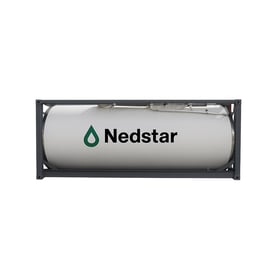
Our ISO tanks support intermodal transport by sea, rail, and road. They are ideal for companies sourcing in medium to large volumes.
Tanktruck
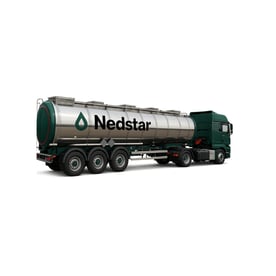
Our tank trucks are widely used worldwide to deliver bulk ethanol by road. They’re a practical option for regional transport and quick distribution.
Nedstar is your reliable partner for cyclopentane
Sourcing high-quality cyclopentane requires consistent specifications, reliable logistics, and a clear understanding of industrial safety and regulatory requirements.
Nedstar supports manufacturers seeking cyclopentane for polyurethane foam, PIR insulation, refrigeration equipment, and other industrial applications. Our specialists help coordinate sourcing, documentation, packaging, and international deliveries.
Whether you are evaluating cyclopentane 95%, cyclopentane 99%, bio-based cyclopentane or specific blowing-agent blends, we can discuss the required grade, supplier availability, and technical documentation.
Looking to buy cyclopentane in bulk? Contact Nedstar to discuss your purity requirements, order volume, delivery destination, and current cyclopentane price.
Explore our related product offering
Isobutanol
Isobutanol is a versatile alcohol used as a solvent and chemical intermediate in coatings, plastics, resins, and advanced industrial applications.
Bio ethyl acetate
Bio ethyl acetate is a renewable-origin solvent used in coatings, printing inks, adhesives, and other industrial formulations requiring effective solvent performance.
Isoamyl alcohol
Isoamyl alcohol, also known as isopentanol, is a versatile chemical intermediate and solvent used in fragrances, flavourings, biofuels, and specialty chemical manufacturing.
Frequently Asked Questions
What is cyclopentane used for?
Cyclopentane is primarily used as a blowing agent in rigid polyurethane and PIR insulation foams. It supports the production of insulation panels, refrigerator cabinets, and freezer insulation. It also serves as a non-polar solvent in selected chemical synthesis and resin-processing applications. Its volatility and low direct GWP make it useful in industrial formulations where appropriate safety controls are available.
Why is cyclopentane replacing HFC blowing agents?
Cyclopentane is used as an alternative to certain HFC blowing agents because it has zero ozone depletion potential and a comparatively low direct global warming potential. It also offers suitable physical blowing properties for rigid insulation foams. However, its high flammability requires manufacturers to implement appropriate equipment, ventilation, leak detection, and ignition-prevention measures.
What makes cyclopentane bio-based?
Bio-based cyclopentane is produced using renewable carbon feedstocks rather than exclusively fossil-derived raw materials. Its renewable origin depends on the specific production pathway and must be supported by appropriate traceability documentation. Depending on the supplier and certification model, renewable content may be demonstrated through physical segregation, recognised chain-of-custody systems or suitable analytical testing.
Is bio-based cyclopentane chemically identical to fossil-based cyclopentane?
Yes. Bio-based and fossil-based cyclopentane share the same molecular formula, C₅H₁₀, CAS number 287-92-3 and chemical structure. Their physical and chemical properties are equivalent when the products meet the same purity specifications. The main distinction is the origin of the carbon feedstock, which can affect sustainability documentation and lifecycle environmental assessments.
How should cyclopentane be handled and stored?
Cyclopentane is a highly flammable liquid whose vapours can form explosive mixtures with air. Store it in suitable, tightly closed containers away from heat, sparks, open flames, and incompatible materials. Industrial facilities should implement adequate ventilation, appropriate electrical equipment, static electricity controls, and suitable personal protective equipment. Always follow the product-specific safety data sheet and applicable regulations.
What is the flash point and boiling point of cyclopentane?
Cyclopentane has a boiling point of approximately 49°C and a commonly reported flash point of around −37°C, although published flash-point values can vary with the test method and source. These properties make it highly volatile and flammable under normal industrial conditions. Manufacturers should consult the relevant safety data sheet before selecting storage, handling, and processing equipment.
What is the difference between cyclopentane 95% and 99%?
Cyclopentane 95% and 99% refer to nominal purity grades, typically determined through analytical testing such as gas chromatography (GC). Higher-purity material may be preferred where impurity limits are particularly important, while other grades may suit specific industrial formulations. Manufacturers should review the certificate of analysis, impurity profile, and application requirements before selecting a grade.
Can Nedstar supply cyclopentane in bulk?
Nedstar provides international biochemical sourcing solutions and can discuss bulk cyclopentane requirements, subject to supplier and grade availability. Packaging options may include approved IBCs, ISO tanks and tank trucks. Customers should specify their required purity, volume, destination, certification needs, and delivery schedule to receive an appropriate sourcing proposal.